Discovering Tiffany's Chapel at the Morse Museum
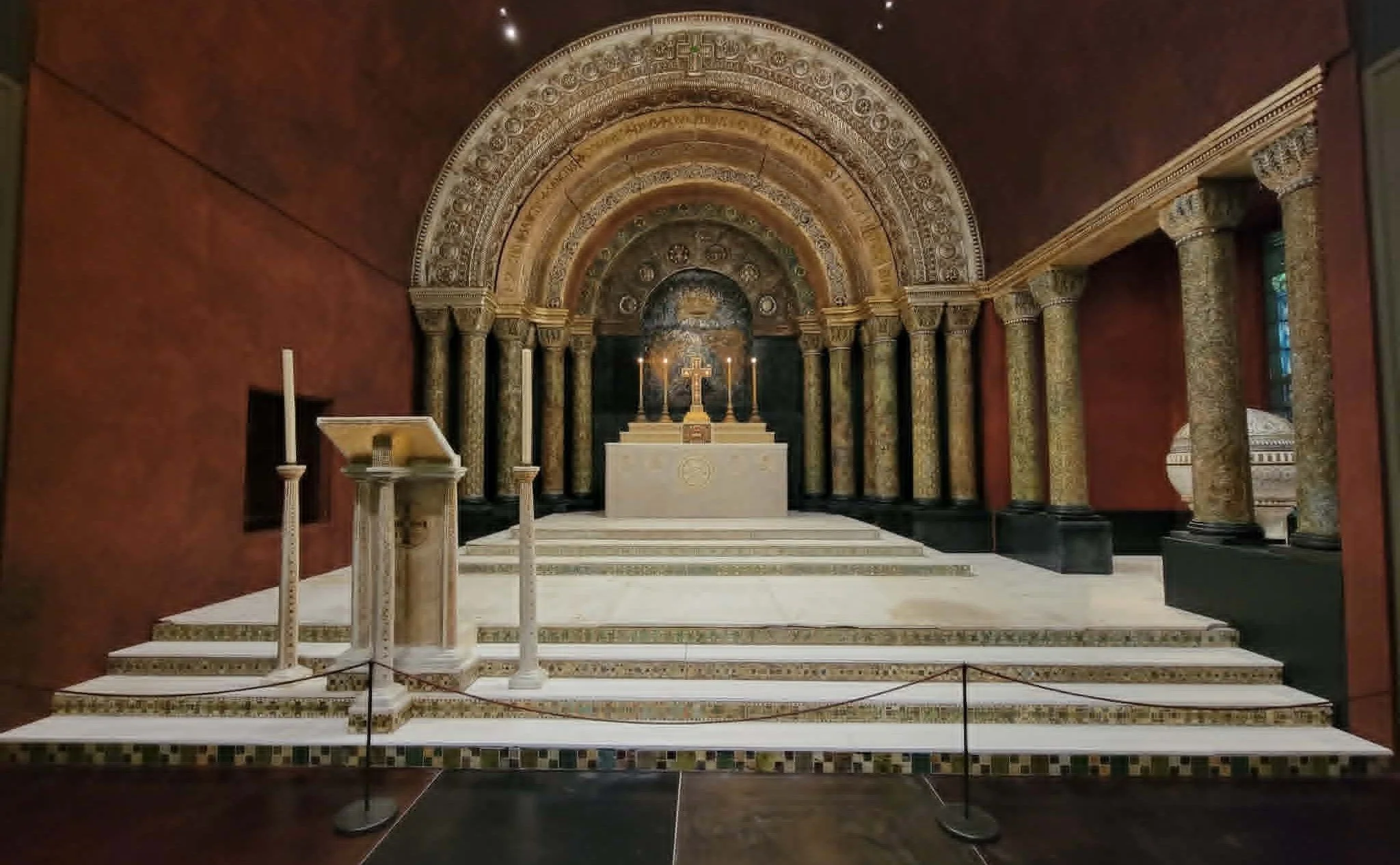
I expected to see Tiffany stained glass. I never imagined I'd discover an entire chapel.
Discovering Tiffany's Chapel at the Morse Museum
One of my favorite parts of traveling is discovering something completely unexpected.
When I visited the Charles Hosmer Morse Museum of American Art in Winter Park, Florida, I went expecting to admire Louis Comfort Tiffany's famous stained-glass windows and decorative art. I had no idea the museum was home to an entire chapel designed by Tiffany himself.
Turning the corner and seeing Tiffany's Chapel for the first time was one of those unforgettable museum moments. The soaring marble arches, shimmering mosaics, vibrant stained glass, and ornate altar immediately transport you to another time and place. It's difficult to believe this magnificent structure was originally built as a temporary exhibit for the 1893 World's Columbian Exposition in Chicago.
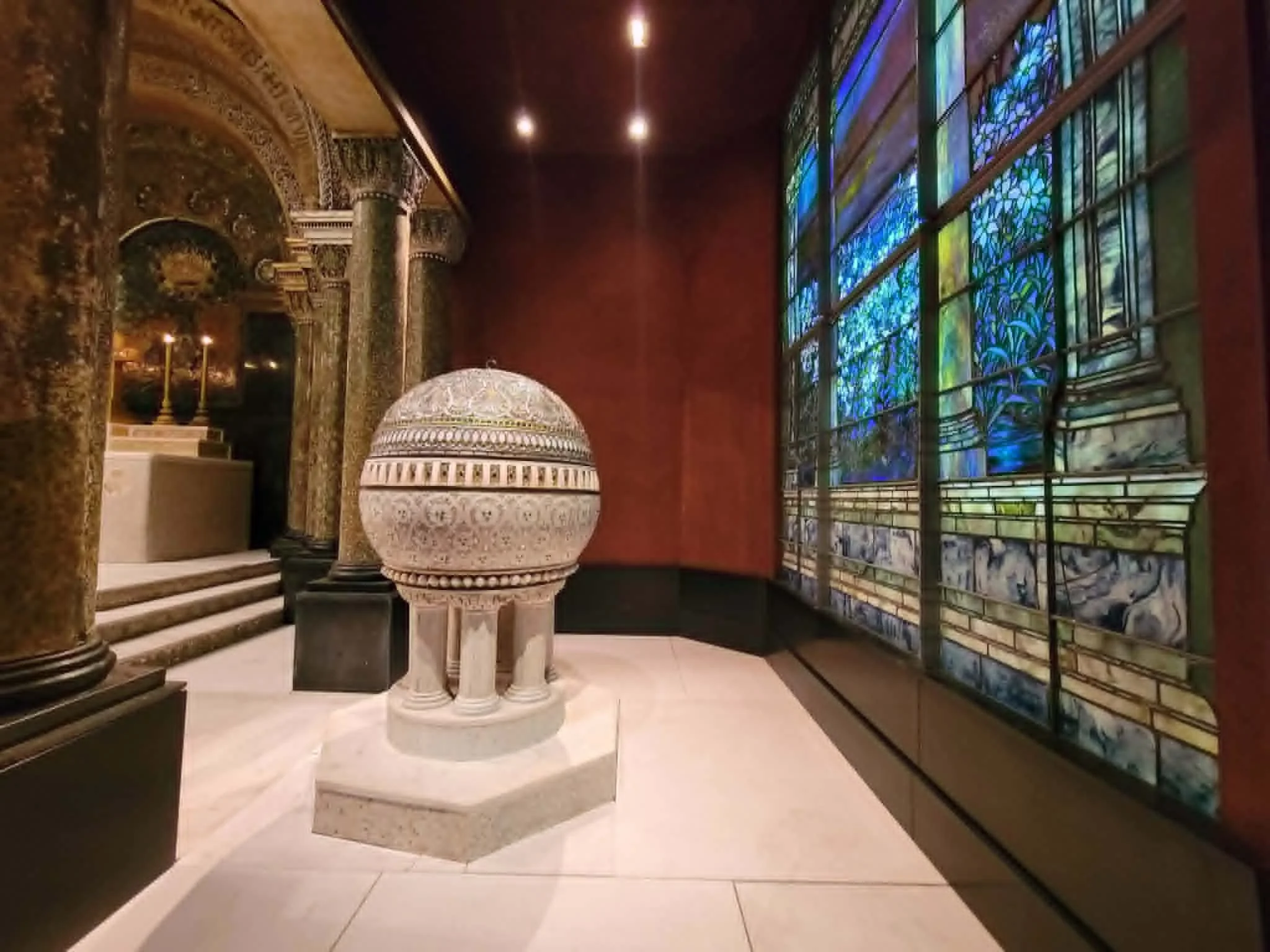
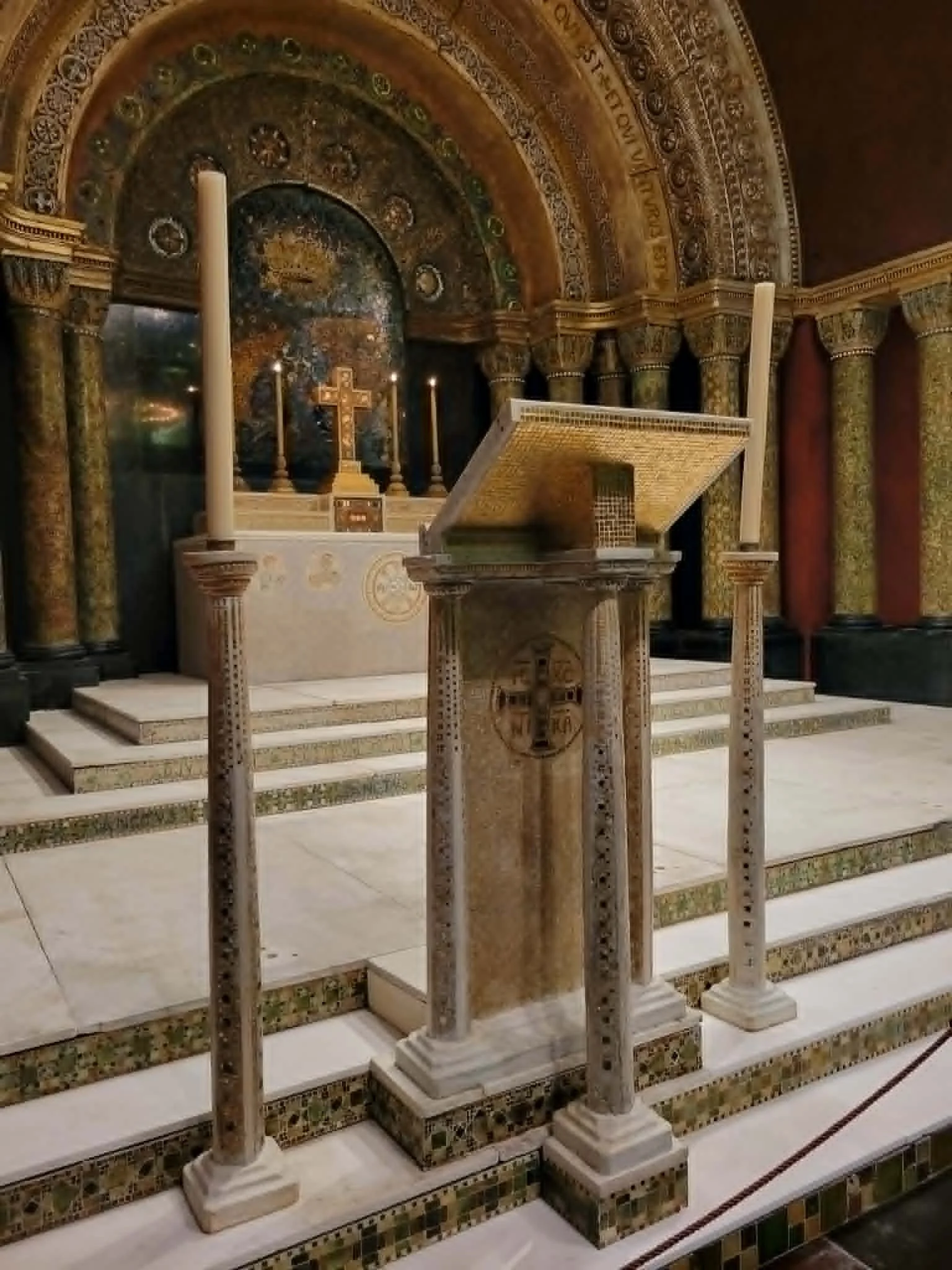
One detail that especially caught my attention was the beautifully crafted marble baptismal font, decorated with delicate mosaics that echoed the chapel's rich artistic style.
The more I learned about the chapel, the more remarkable its story became.
A Star of the 1893 World's Columbian Exposition
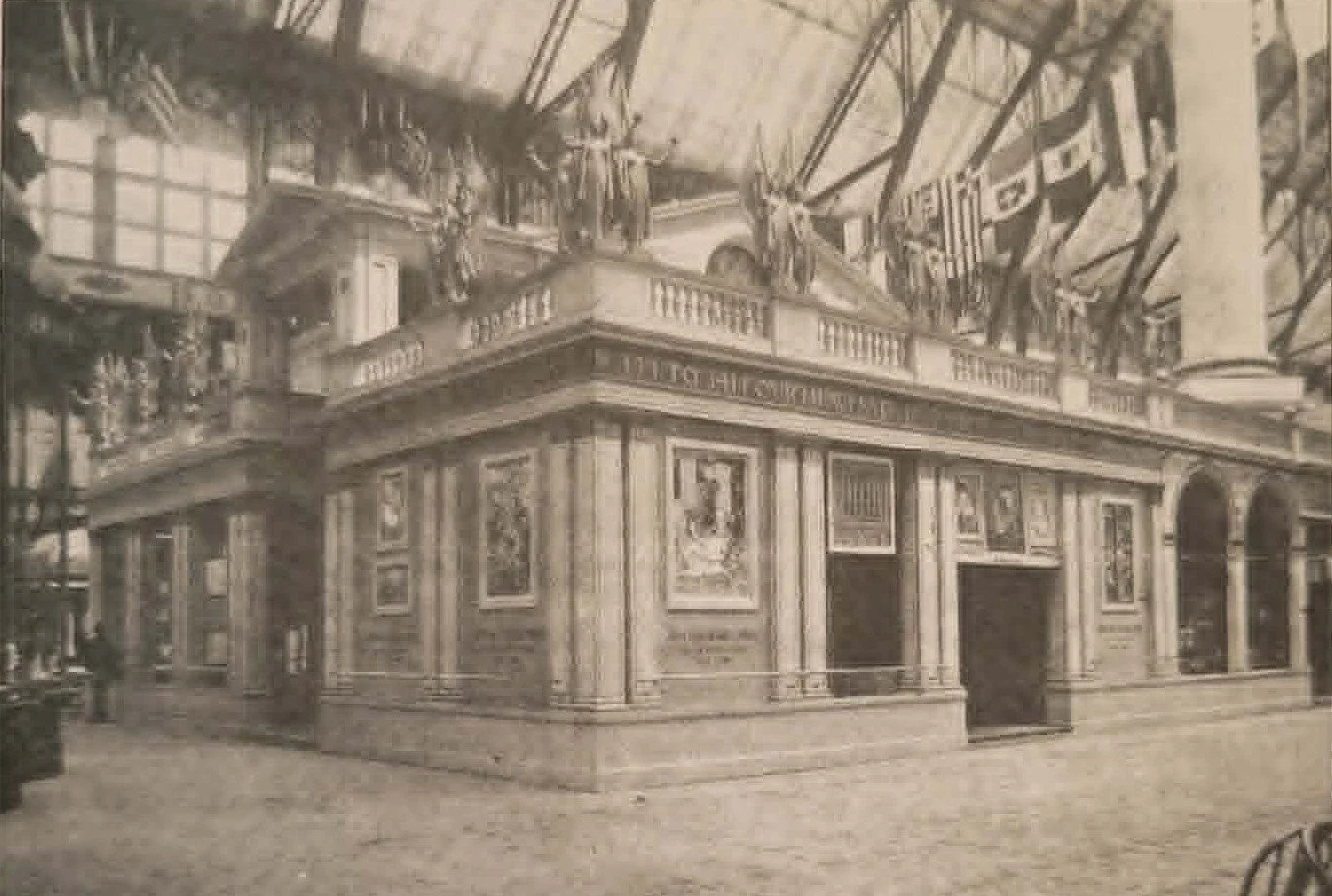
In 1893, Louis Comfort Tiffany and the Tiffany Glass and Decorating Company created an elaborate display for the World's Columbian Exposition, better known as the Chicago World's Fair. The international exposition celebrated the 400th anniversary of Christopher Columbus's voyage and attracted more than 27 million visitors from around the world.
Preparing for the fair was anything but easy. Construction delays and organizational problems left many exhibitors uncertain whether they would even have space. At the last minute, Tiffany's father, Charles Lewis Tiffany—the founder of Tiffany & Co.—offered part of his own exhibit space to his son.
With only weeks to prepare, Tiffany and his artisans created a magnificent Byzantine-inspired chapel showcasing their mastery of stained glass, mosaics, lighting, marble, and ecclesiastical design. The display was intended to demonstrate that Tiffany's studios could create complete interiors—not just individual works of art.
The gamble paid off. The chapel became one of the exposition's most celebrated exhibits, drawing widespread attention and helping establish Louis Comfort Tiffany as one of America's leading artists and designers.
More Than Beautiful Stained Glass
Most people associate Louis Comfort Tiffany with his iconic lamps and stained-glass windows, but Tiffany's Chapel reveals the full scope of his artistic vision.
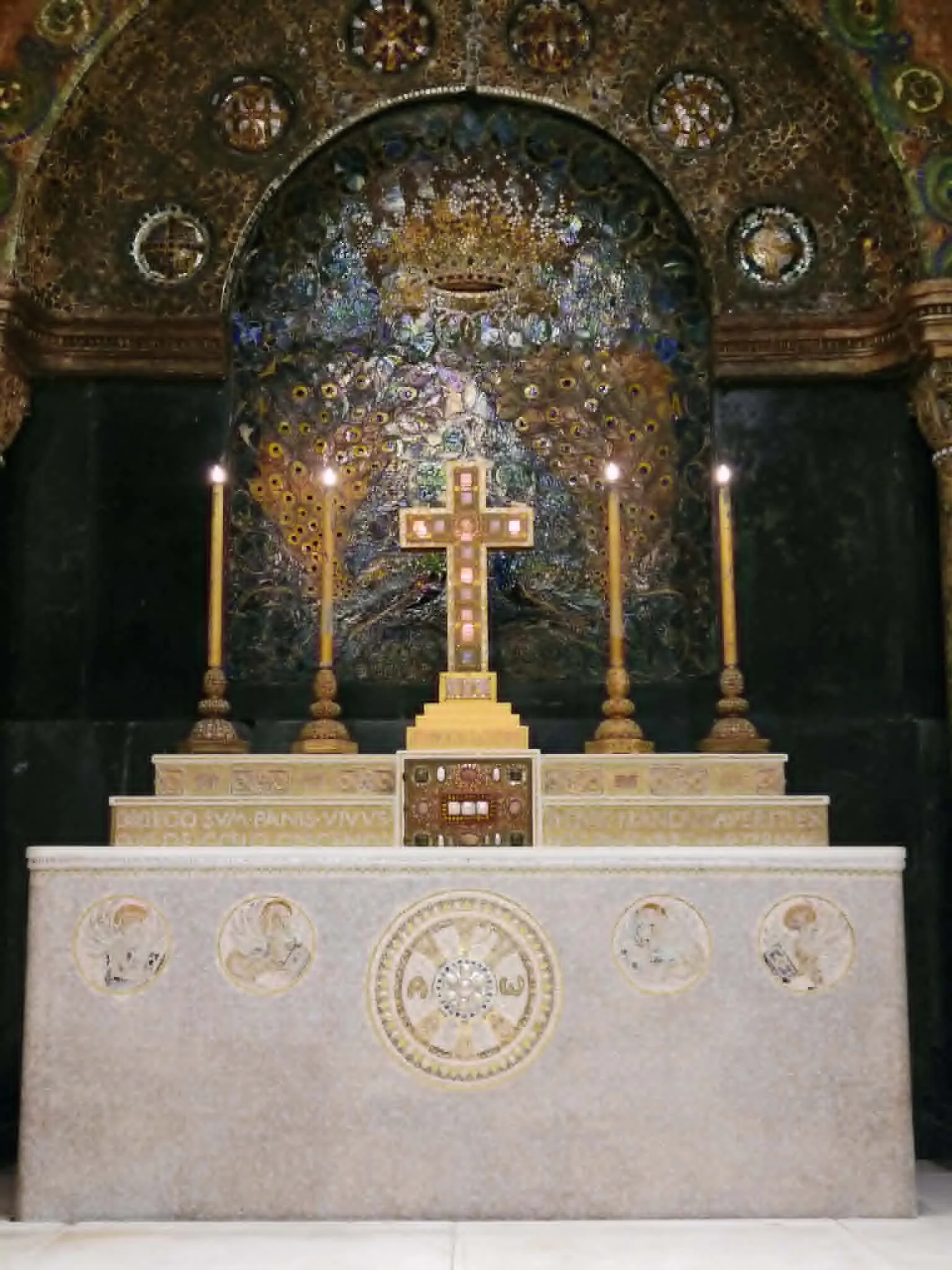
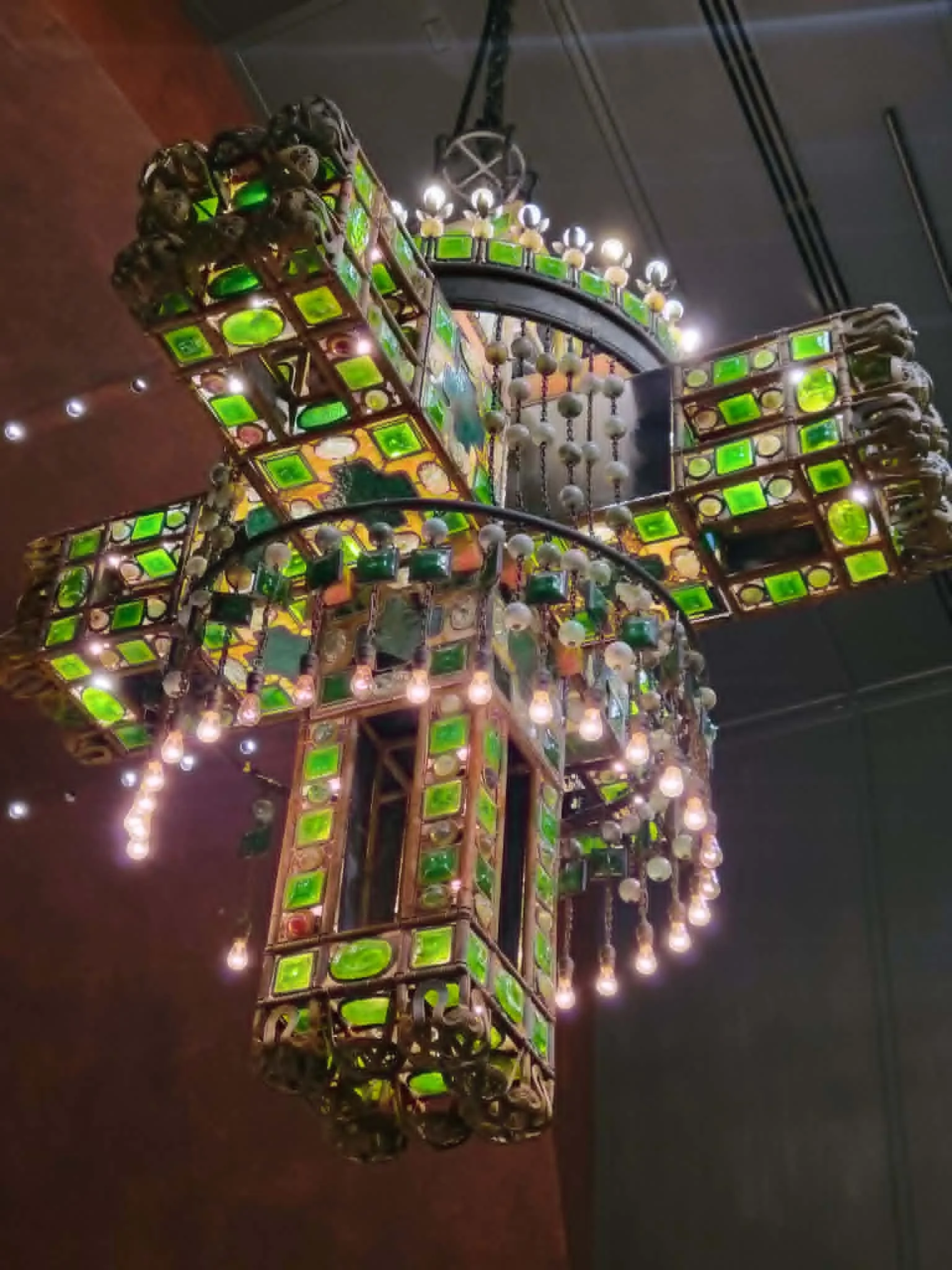
Nearly every architectural element was designed by Tiffany or artists working in his studios. Richly decorated arches frame the altar. Marble columns are accented with shimmering glass mosaics. An electrified chandelier—remarkably modern for 1893—hangs overhead, while every decorative detail contributes to a unified work of art.
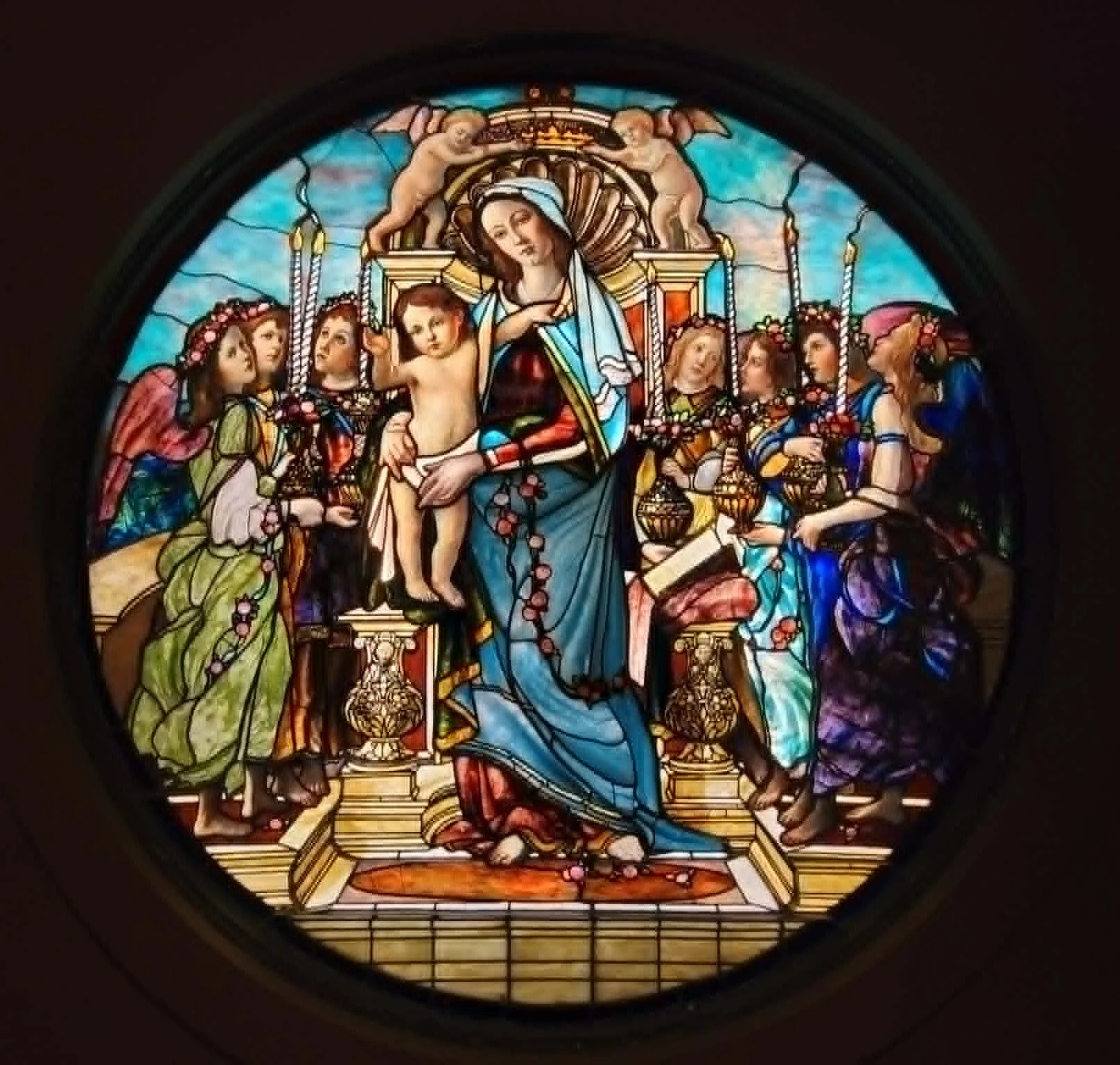
One of the chapel's most striking features is the Madonna and Child window, inspired by Sandro Botticelli's Renaissance painting Madonna and Child Attended by Seven Angels. Tiffany recreated the masterpiece using his revolutionary opalescent glass, giving the figures incredible depth, texture, and luminous color.
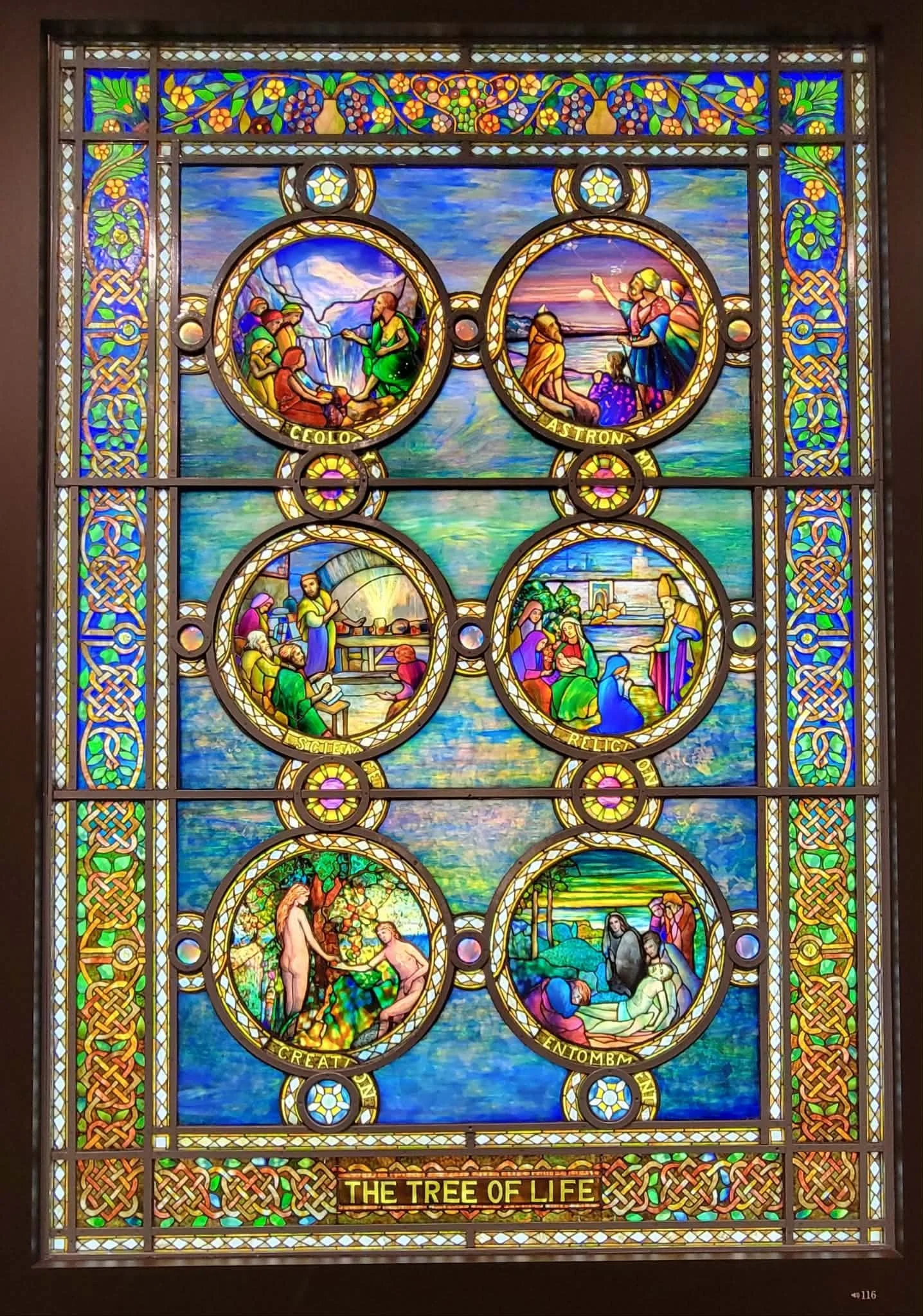
Another window that drew my attention was The Tree of Life. Six colorful medallions depict key moments from the Bible—from Creation to the Entombment of Christ—surrounded by intricate grapevines and Celtic-inspired ornamentation. The brilliant blues and vibrant opalescent glass demonstrate why Tiffany's stained glass remains unmatched more than a century later.
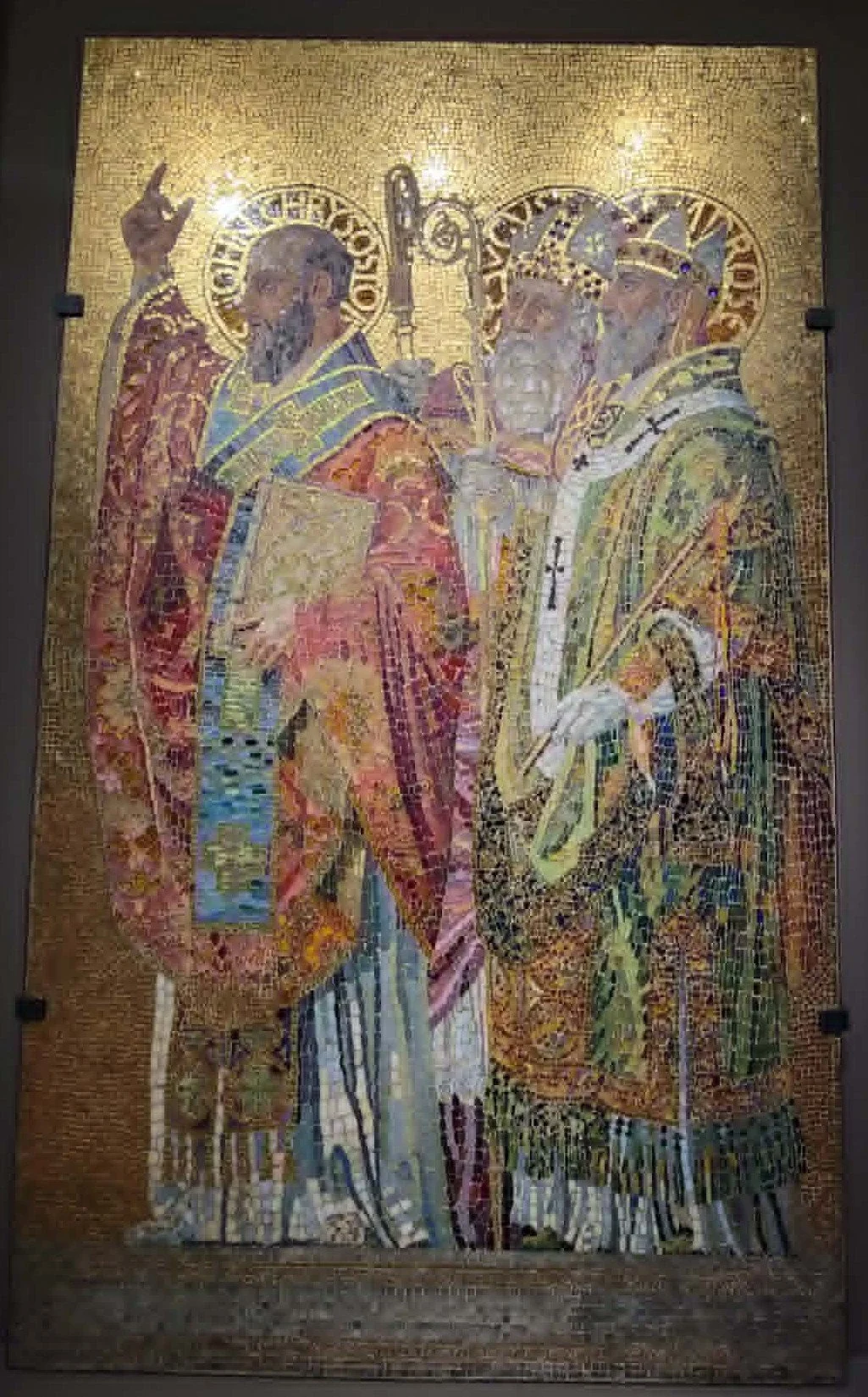
Another highlight is the monumental mosaic Fathers of the Church, depicting Saints John Chrysostom, Augustine, and Ambrose. Standing more than eight feet tall, it demonstrates Tiffany's mastery not only of stained glass but also of mosaic artistry.
Beyond the chapel itself, I discovered another Tiffany masterpiece elsewhere in the museum that quickly became one of my favorite pieces. A beautiful grape arbor window frames a classical marble sculpture beyond it. Rather than depicting a religious scene, the leaded glass creates the illusion of looking through a vine-covered garden arbor into a secluded courtyard. The vibrant clusters of grapes, twisting vines, and countless shades of opalescent glass showcase Tiffany's extraordinary ability to transform nature into art. It was another reminder that Tiffany’s genius extended far beyond the chapel itself.
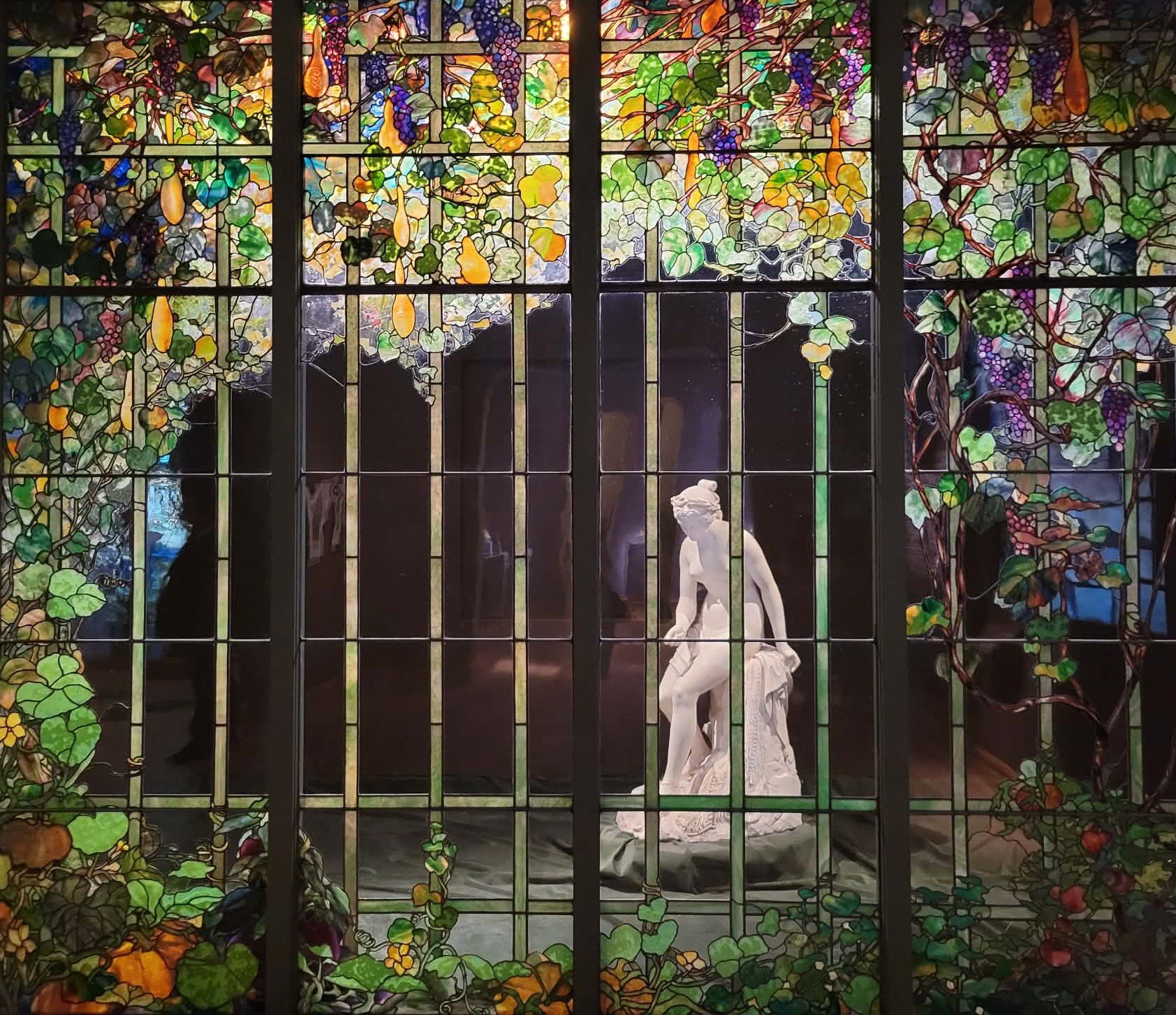
As beautiful as the photographs are, they simply can't capture the way the glass glows as light passes through it or the incredible detail visible up close.
A Chapel That Refused to Disappear
The chapel was never intended to be permanent.
When the World's Fair ended, Tiffany relocated many of the exhibit's pieces to his New York City showroom, where visitors could continue to experience the remarkable display. In 1894, the chapel was purchased for the Cathedral of St. John the Divine in Manhattan and installed in the cathedral's crypt, where it served as a place of worship for about ten years.
As construction of the cathedral progressed, the chapel was eventually closed and fell into disrepair.
Concerned about its fate, Tiffany reacquired the chapel in 1916 and moved it to Laurelton Hall, his Long Island estate. There, he restored it, added new features, and reopened it as part of his personal artistic retreat.
Following Tiffany's death in 1933, Laurelton Hall was dispersed, and many of the chapel's architectural elements and furnishings were scattered among collectors and institutions. It seemed possible that this extraordinary masterpiece might be lost forever.
A New Home at the Morse Museum
Fortunately, the story didn't end there.
In 1959, Hugh and Jeannette McKean, founders of the Charles Hosmer Morse Museum of American Art, began acquiring the surviving architectural elements of the chapel. Over the following decades, they painstakingly reunited windows, mosaics, furnishings, and structural components that had been dispersed after Laurelton Hall was dismantled.
Using historic photographs, architectural drawings, and surviving artifacts, museum conservators undertook an extensive restoration and reconstruction project. Their goal wasn't simply to display individual pieces, but to recreate the experience visitors would have had when they entered Tiffany's chapel in 1893.
The reconstructed chapel opened to the public in 1999.
Today, nearly every surviving original architectural element from Tiffany's World's Fair display has been reunited. Decorative moldings, carved plaster arches, marble columns encrusted with glass mosaics, stained-glass windows, and even the magnificent electrified chandelier have all found a new home within the museum.
My Visit
Standing inside Tiffany's Chapel was easily one of the highlights of my visit to the Morse Museum.
I found myself lingering, taking in the brilliant colors of the stained glass, the intricate mosaics, and the remarkable craftsmanship visible in every corner. Every time I looked up, I noticed another detail I had missed only moments before.
It's easy to understand why visitors to the 1893 World's Fair were captivated by this extraordinary exhibit. More than 130 years later, it still inspires awe.
As I left the museum, I couldn't help thinking about how close this masterpiece came to being lost forever. Instead, thanks to decades of careful preservation, visitors today can discover Tiffany's Chapel just as I did—unexpectedly, and with a sense of wonder that stays with you long after you leave.
Planning Your Visit
If you're planning a trip to the Orlando area, don't overlook the Charles Hosmer Morse Museum of American Art in nearby Winter Park. While the museum is renowned for housing the world's most comprehensive collection of works by Louis Comfort Tiffany, Tiffany's Chapel alone is worth the visit.
Allow yourself plenty of time. This isn't an exhibit you'll want to rush through. Whether you appreciate history, architecture, religious art, or simply extraordinary craftsmanship, Tiffany's Chapel is an unforgettable experience—and one of Florida's hidden cultural treasures.
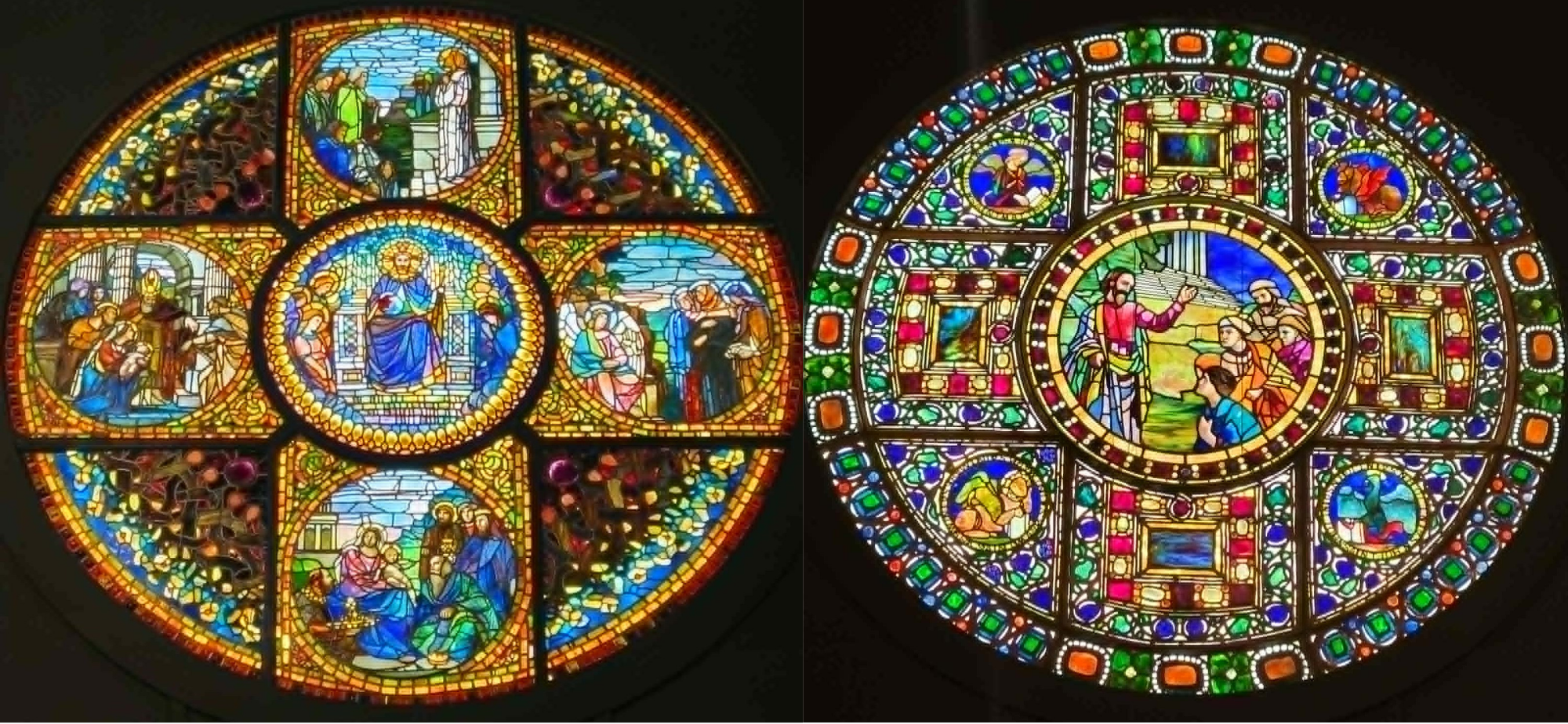
Every corner of Tiffany's Chapel revealed another remarkable detail, making it a place I'd happily return to visit again.